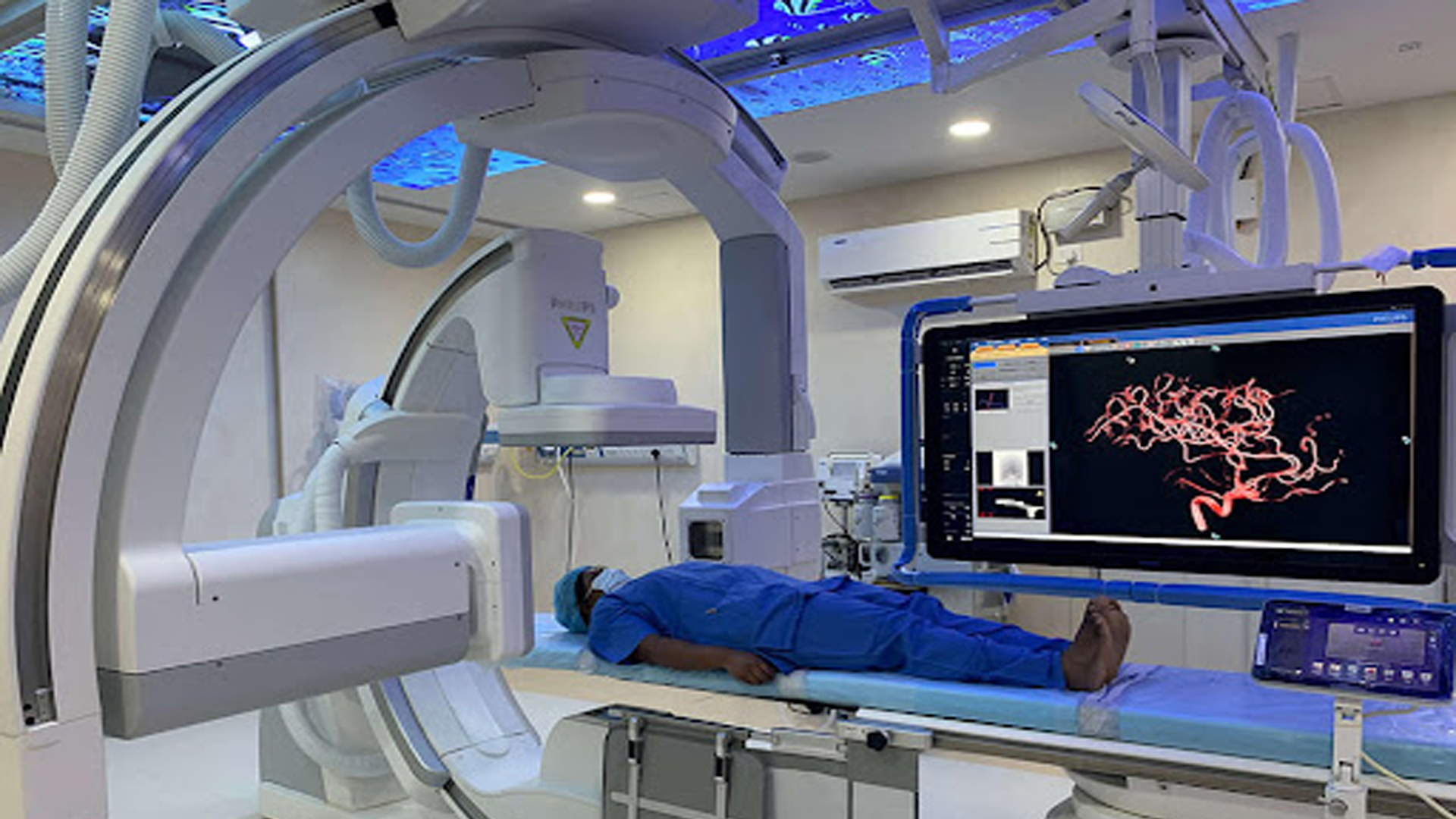
Interventional radiologists diagnose and treat disease. They treat a wide range of conditions in the
body by inserting various small tools, such as catheters or wires from outside the body. X-ray and imaging techniques such as CT and
ultrasound help guide the radiologist. Interventional radiology can be used instead of surgery for many conditions. In some cases, it
can eliminate the need for hospitalization.
The main benefits of interventional radiology techniques are that they can reach the deep
structures of the body through a body orifice or tiny incision using small needles and wires. That decreases risks, pain, and recovery
compared to open procedures. Real-time visualization also allows precision guidance to the abnormality, making the procedure or diagnosis
more accurate. These benefits are weighed against the additional risks of lack of immediate access to internal structures
(should bleeding or a perforation occur), and the risks of radiation exposure such as cataracts and cancer.